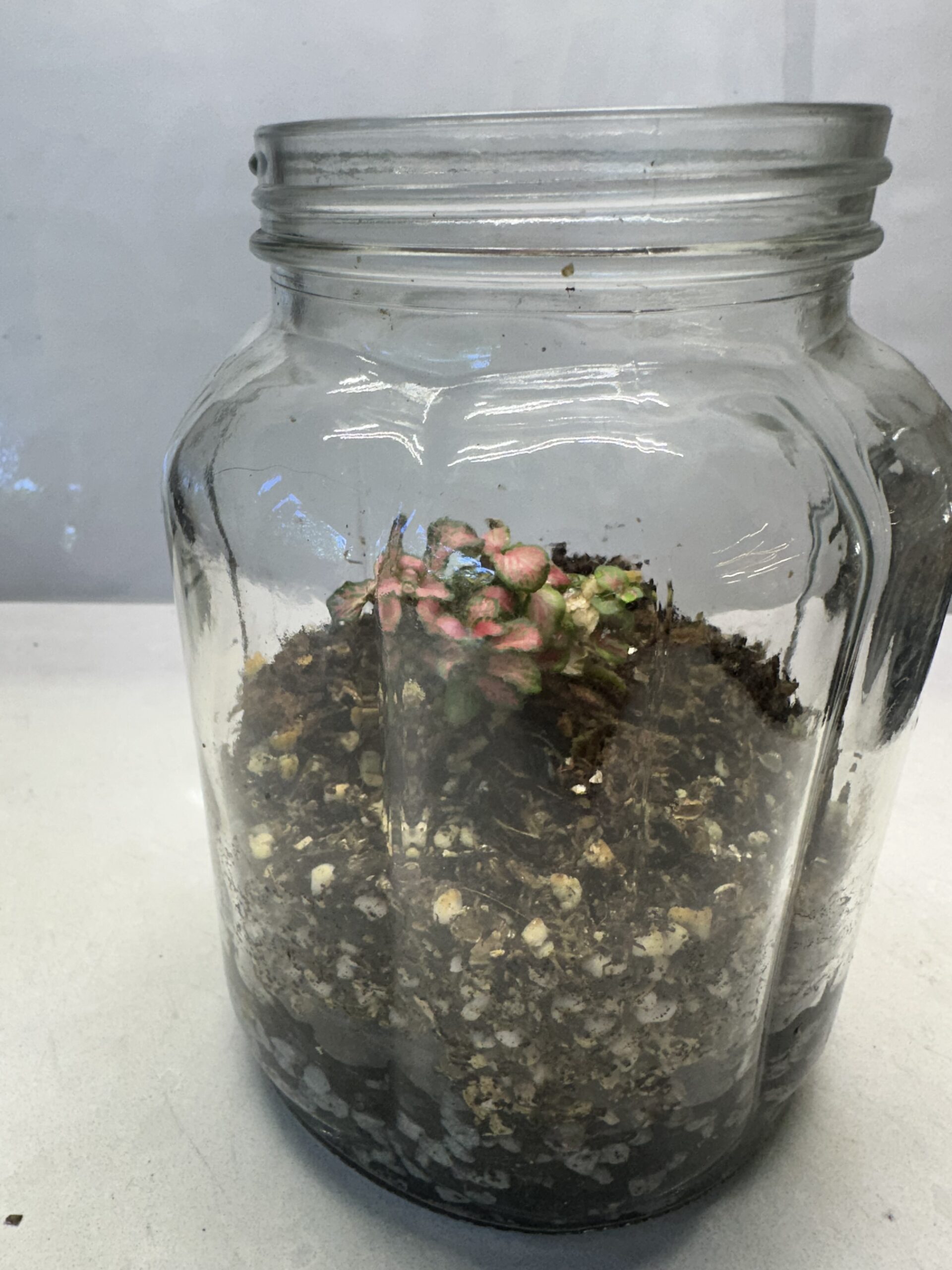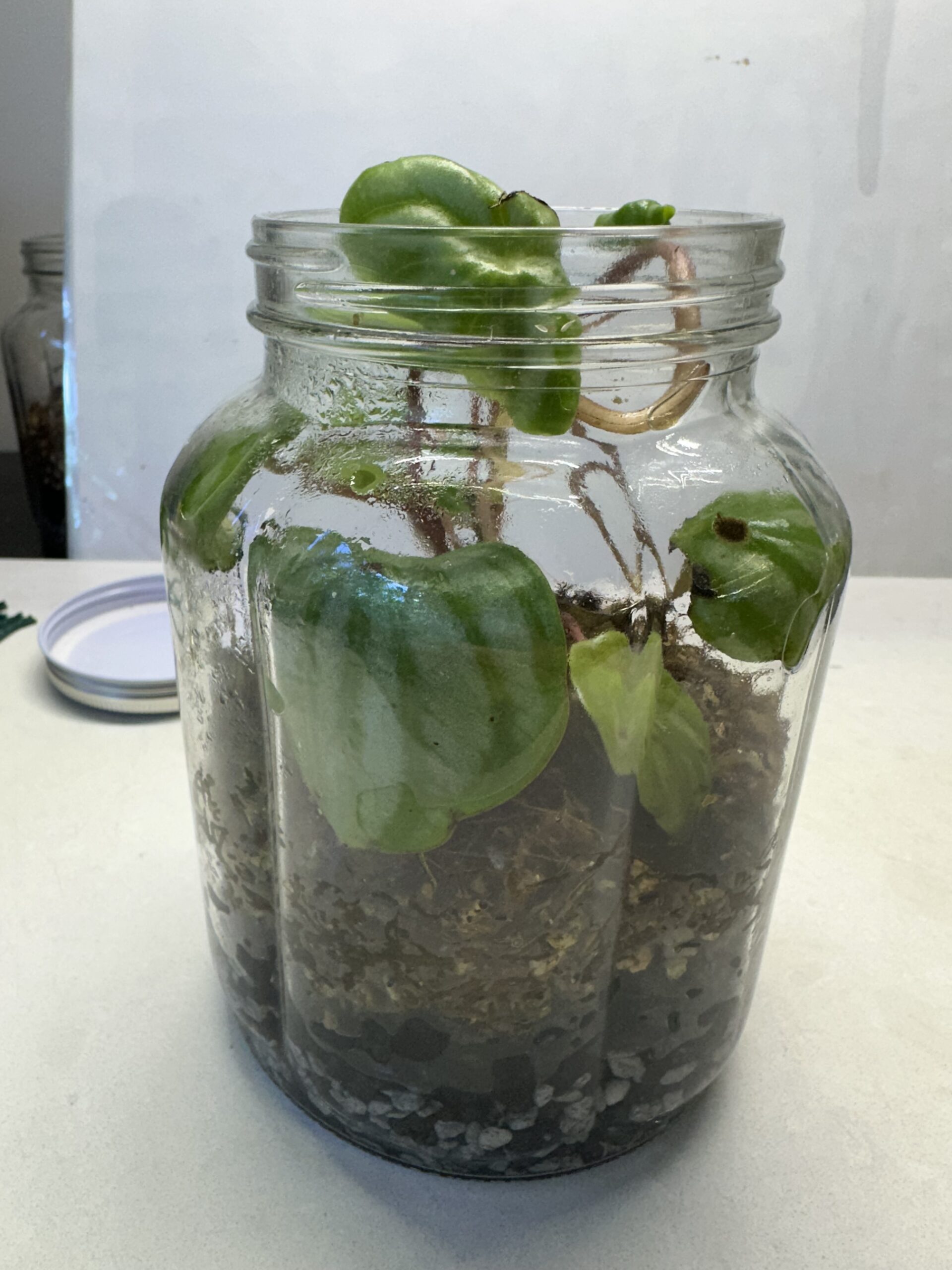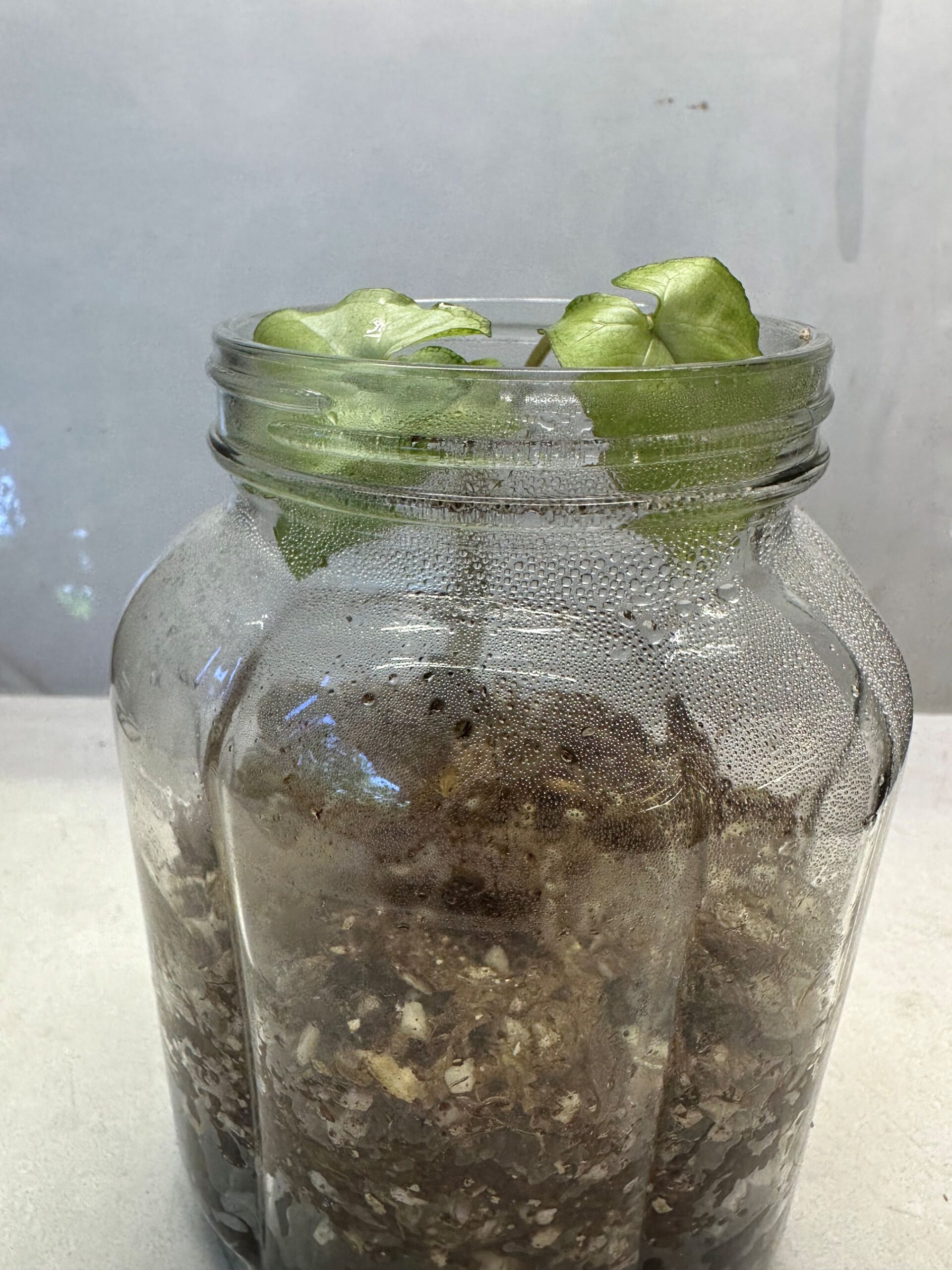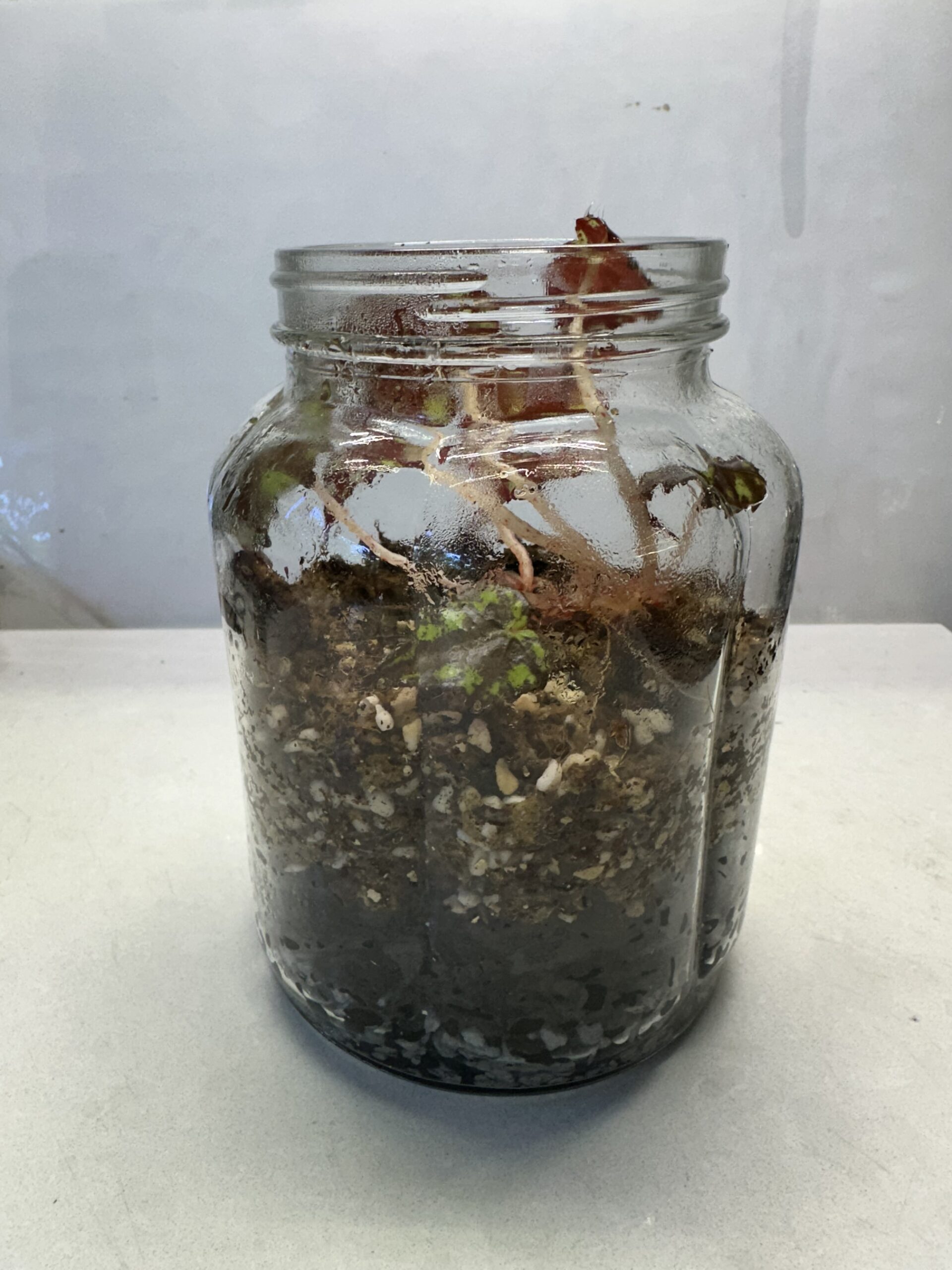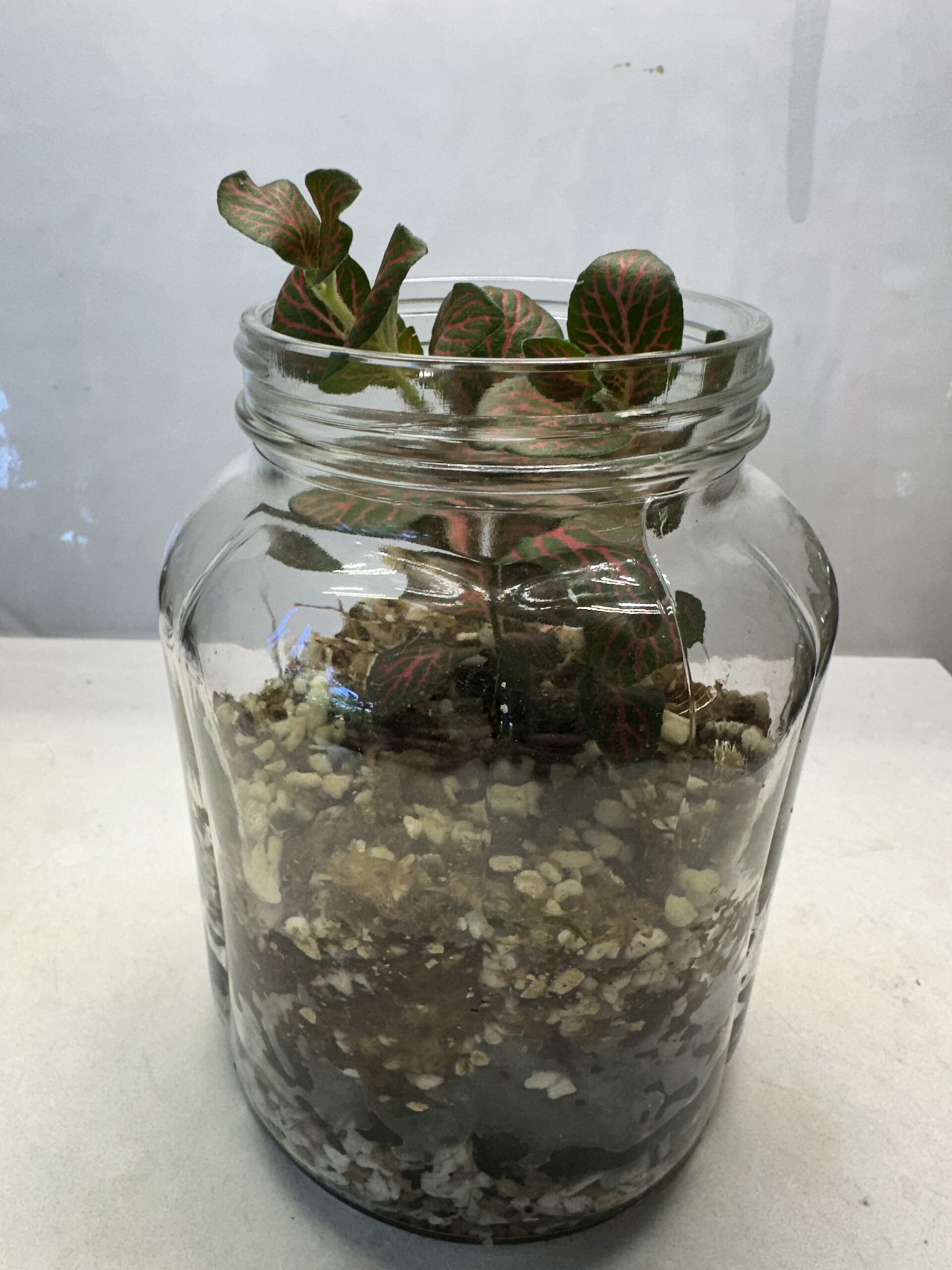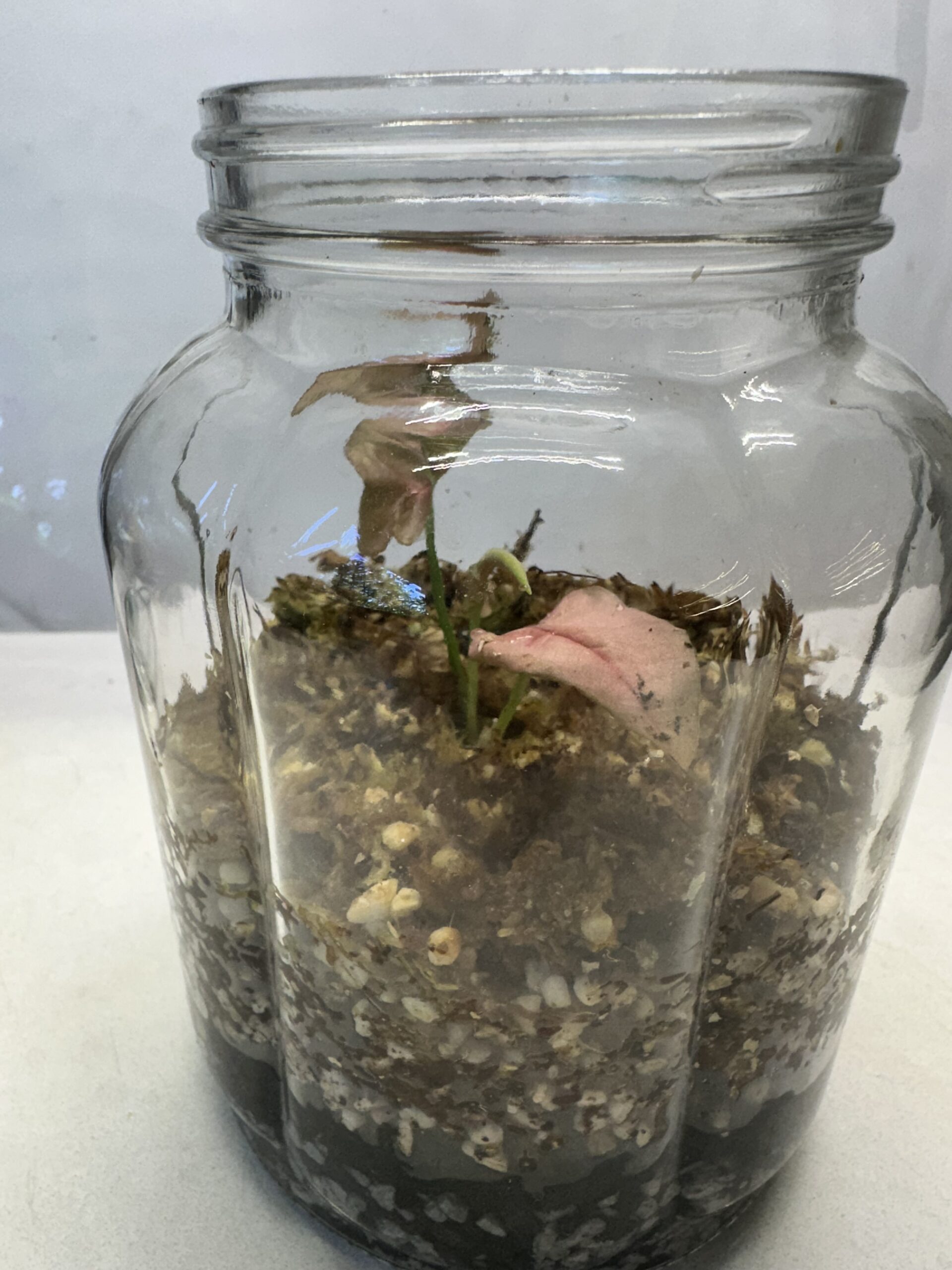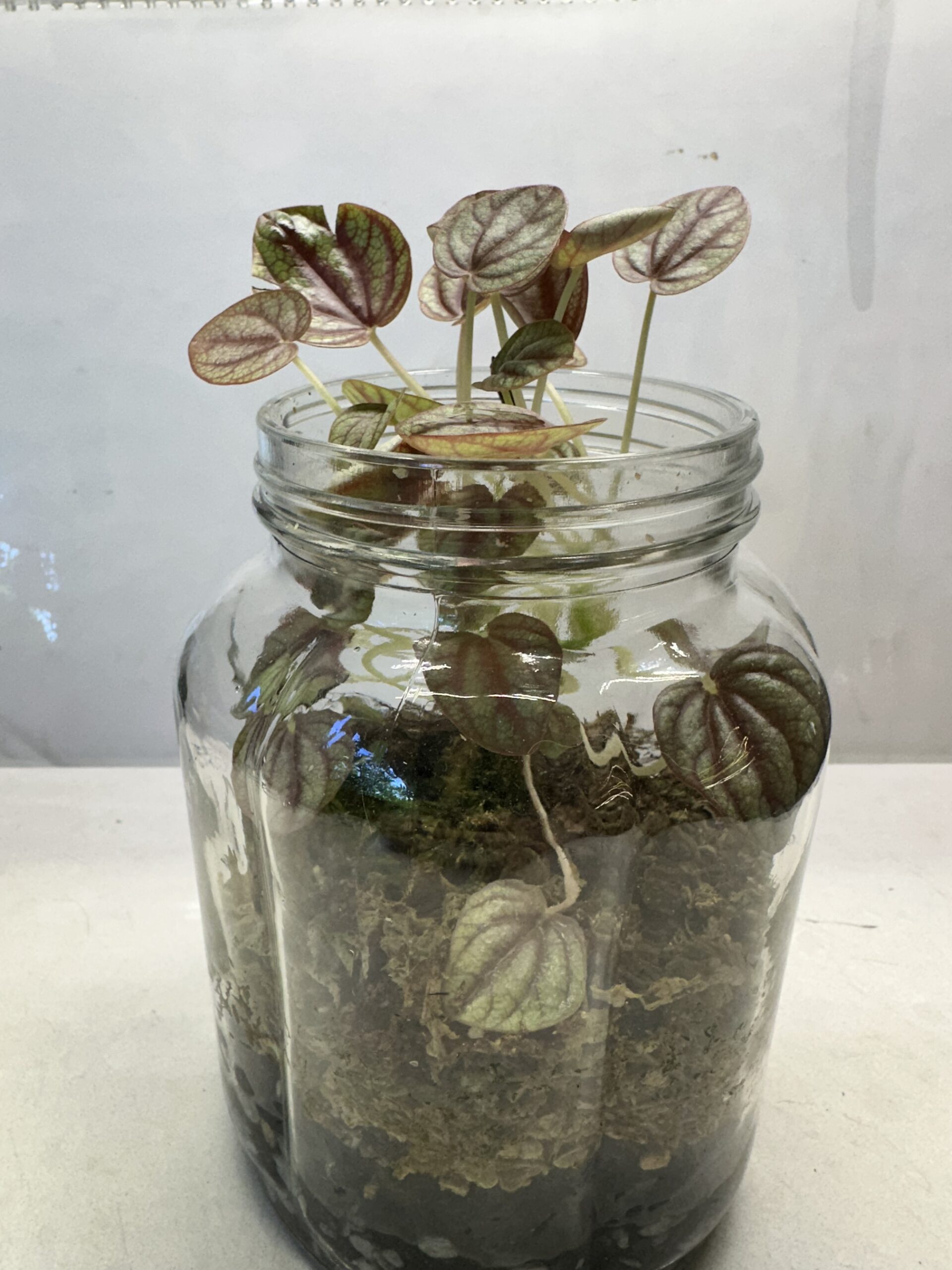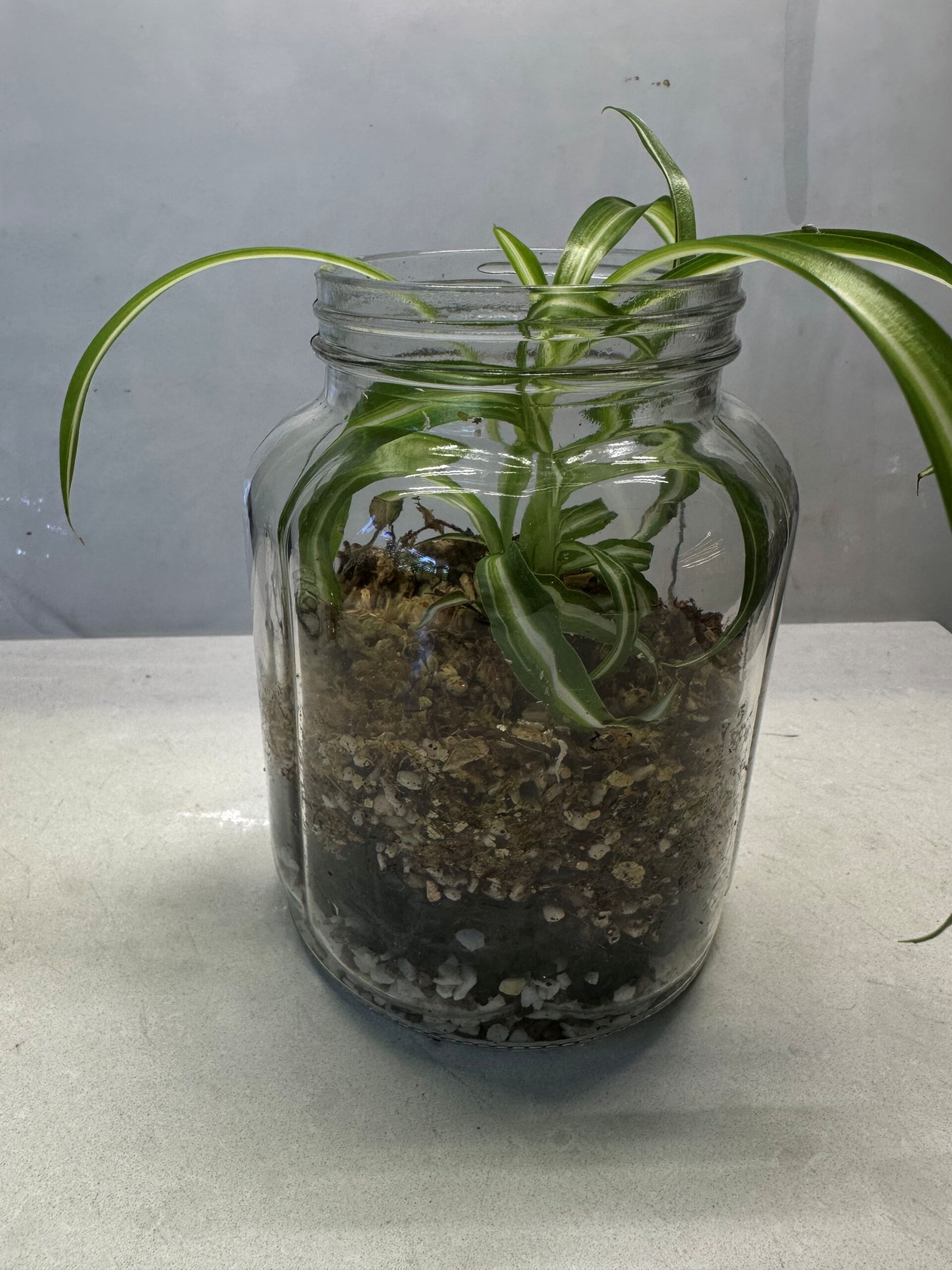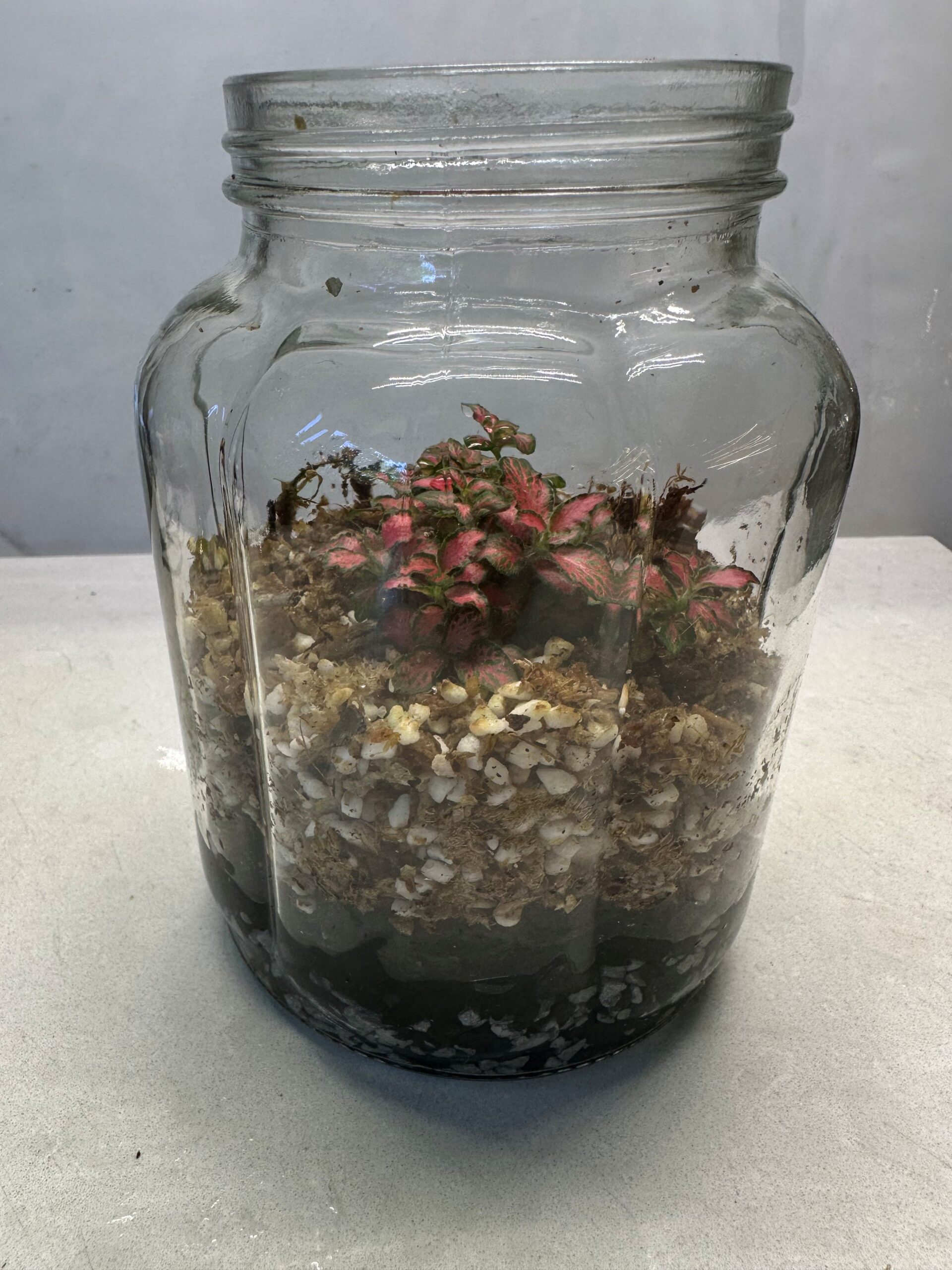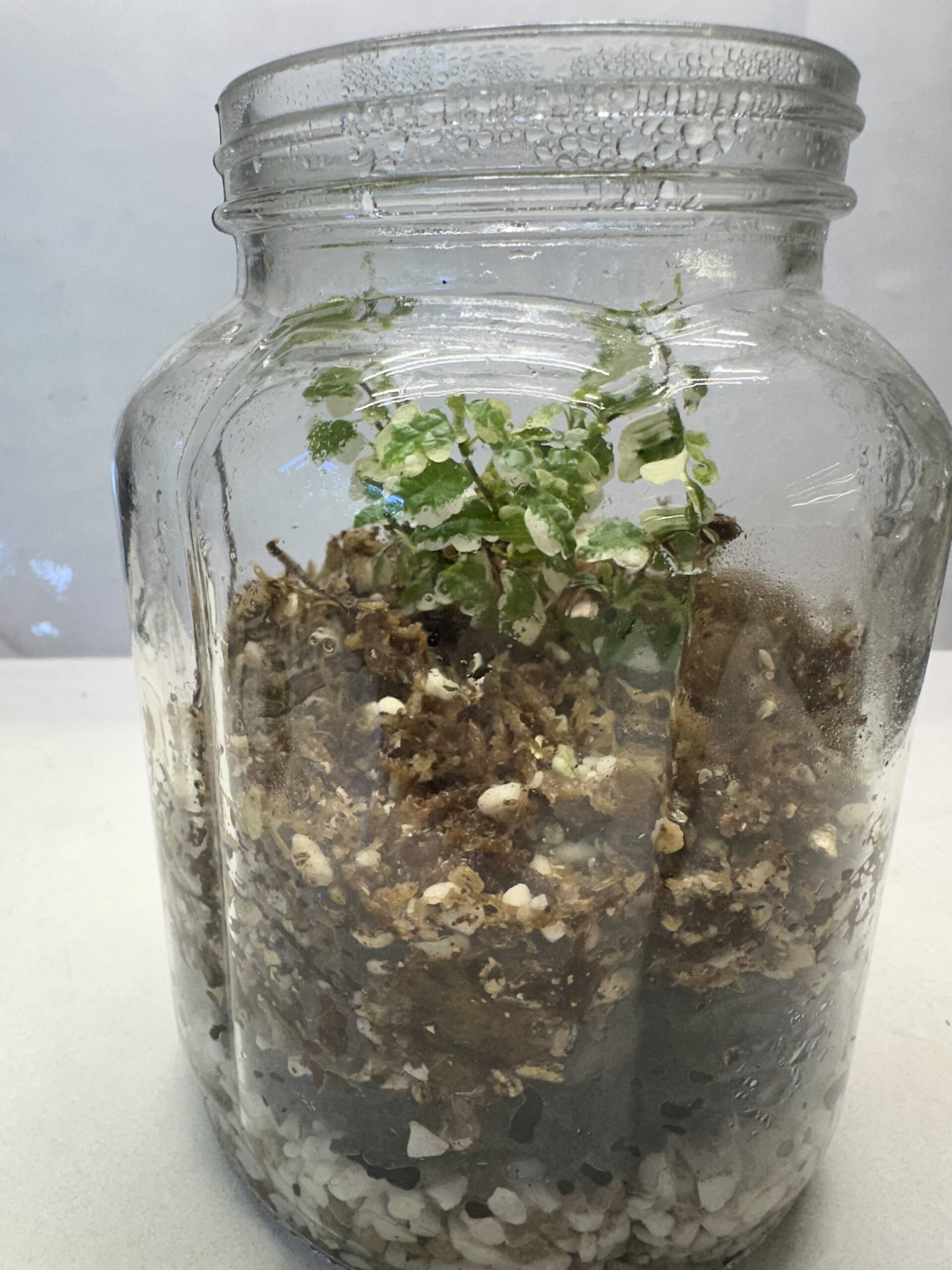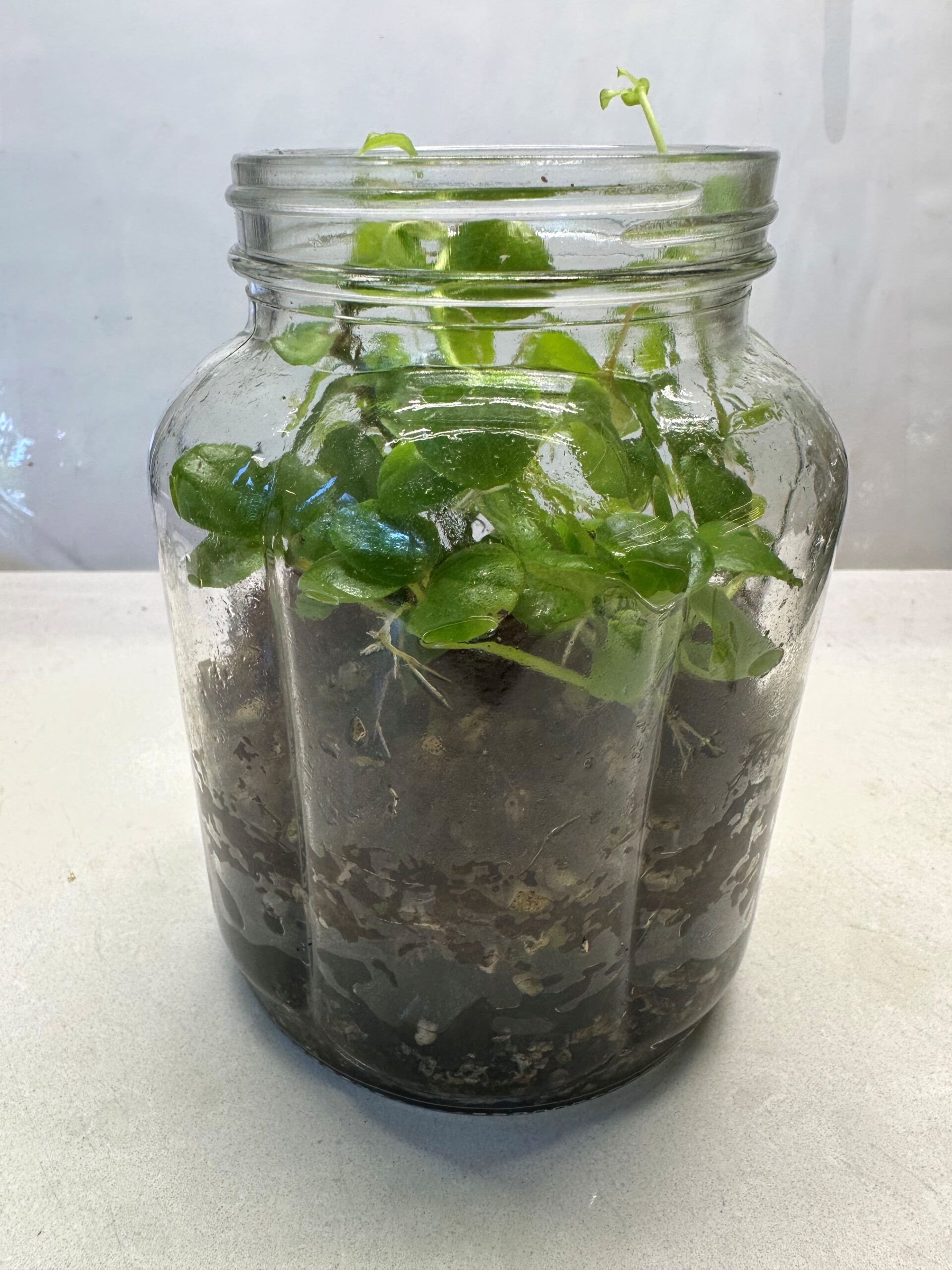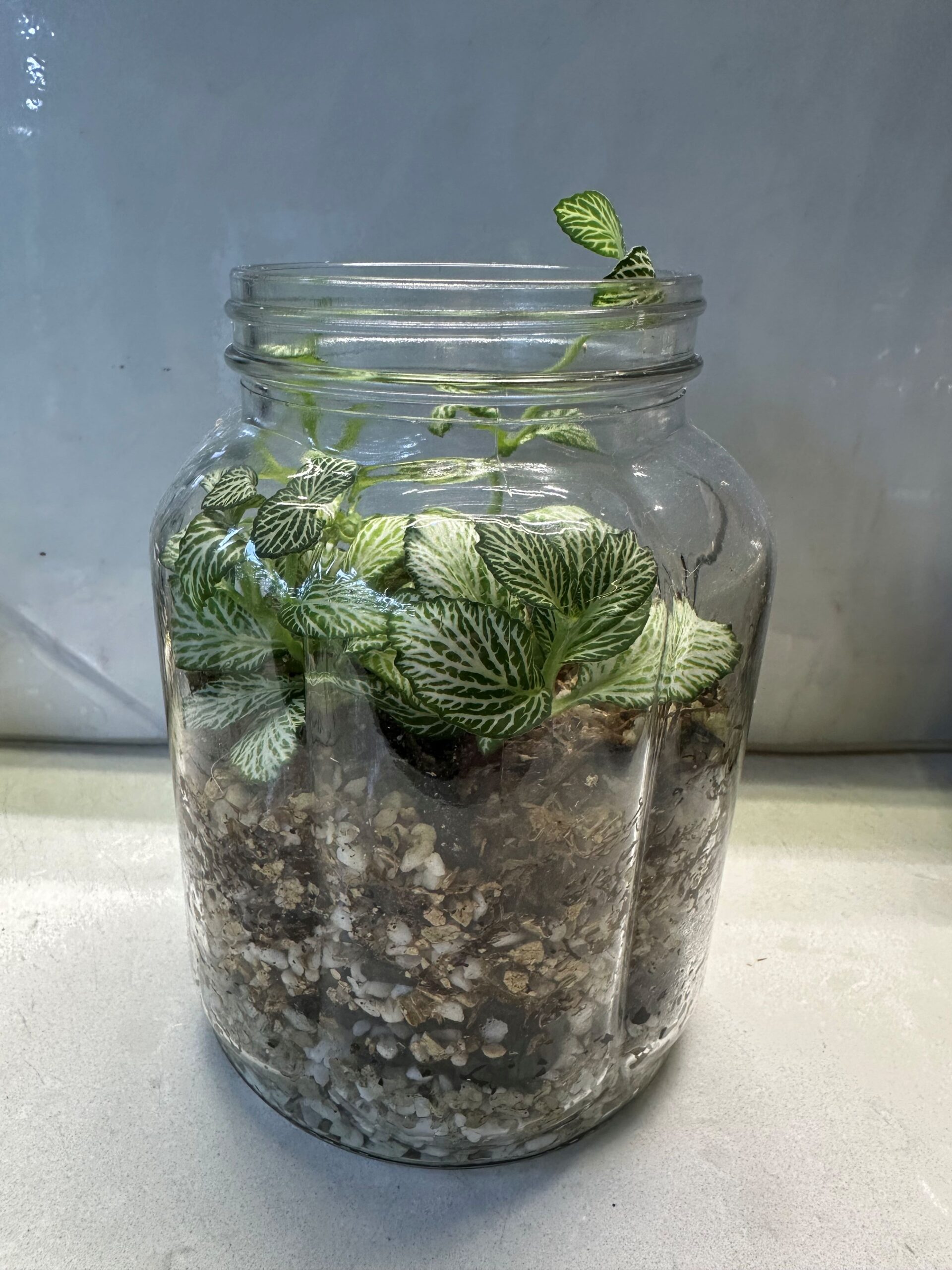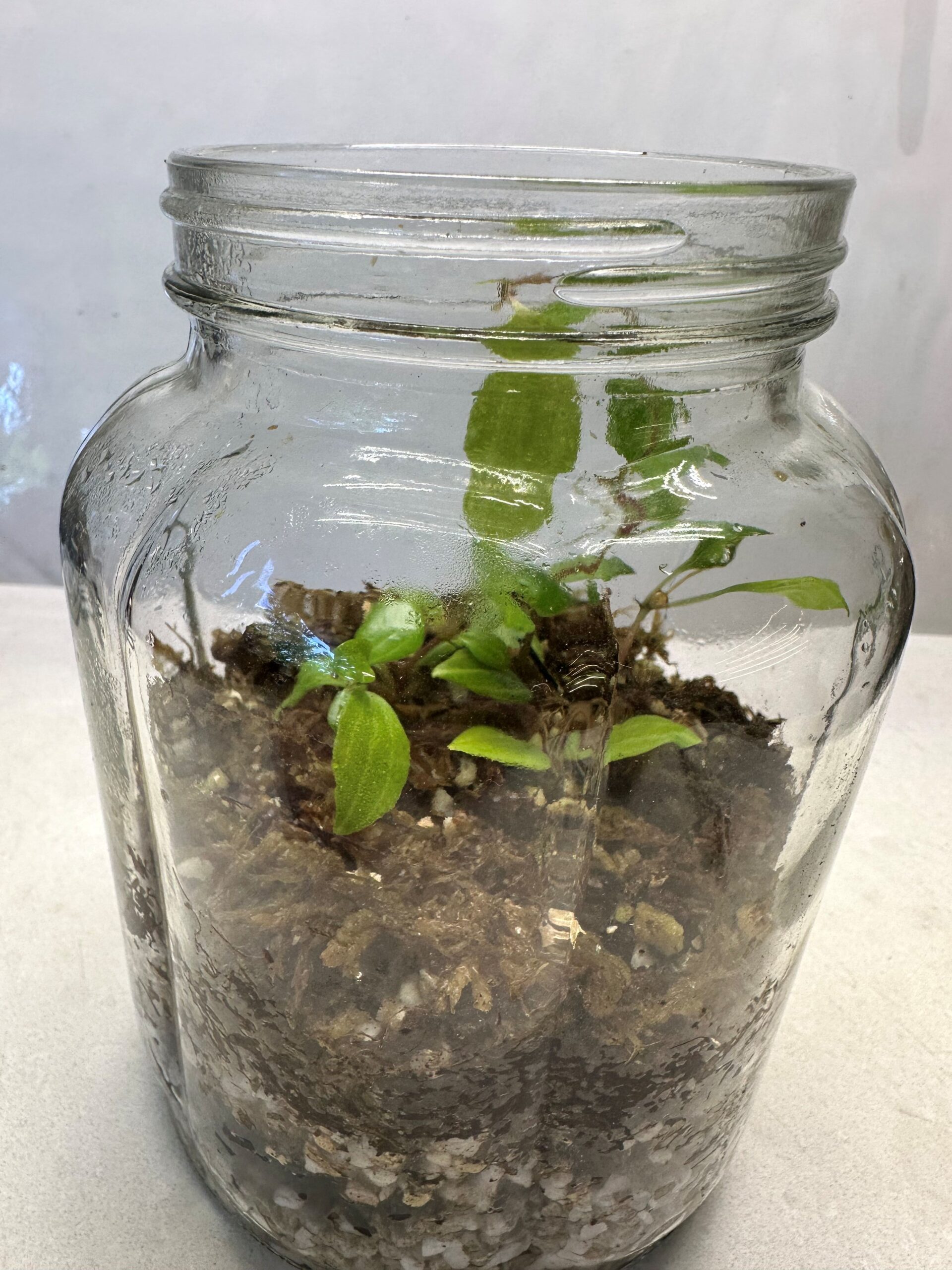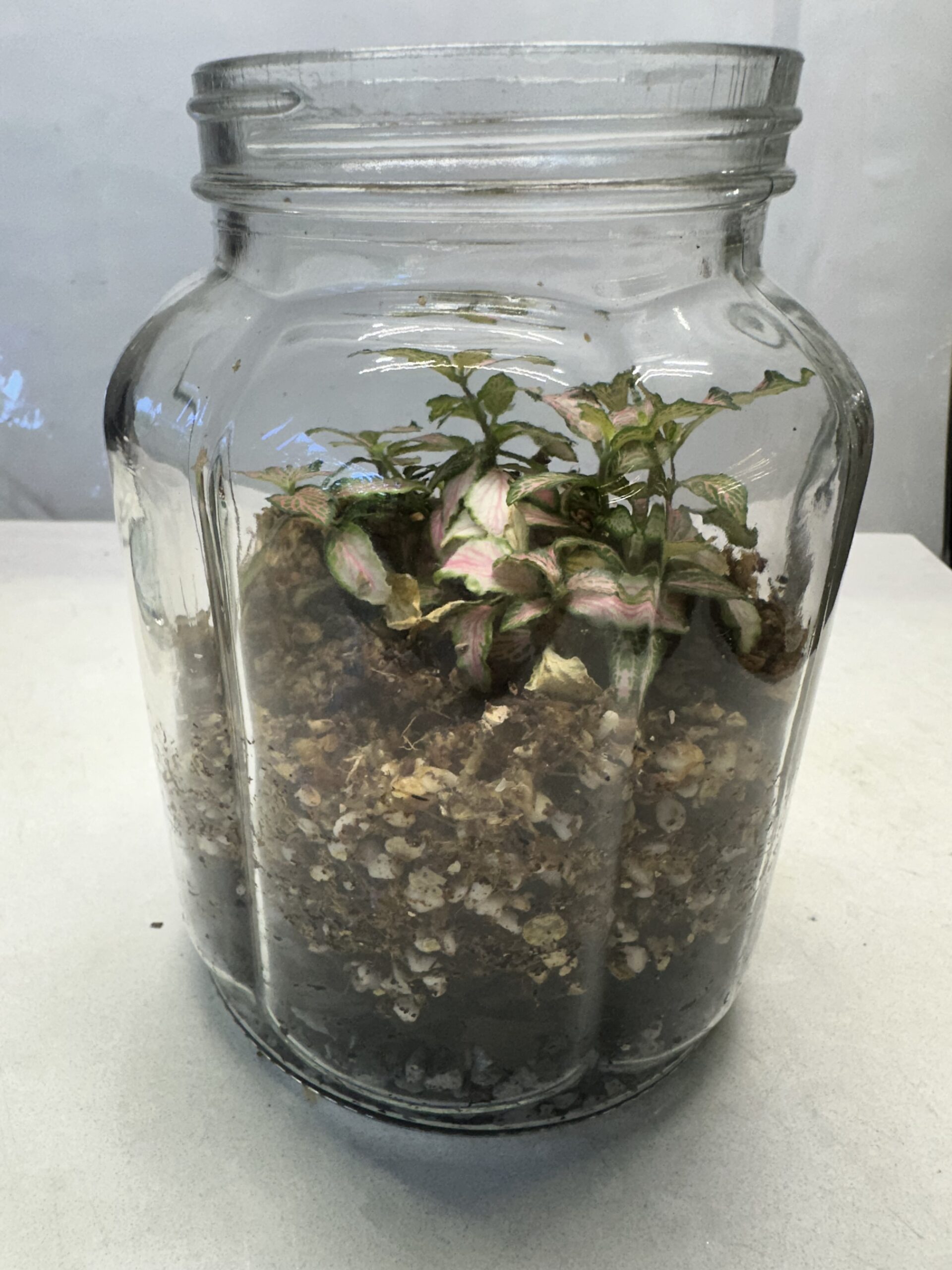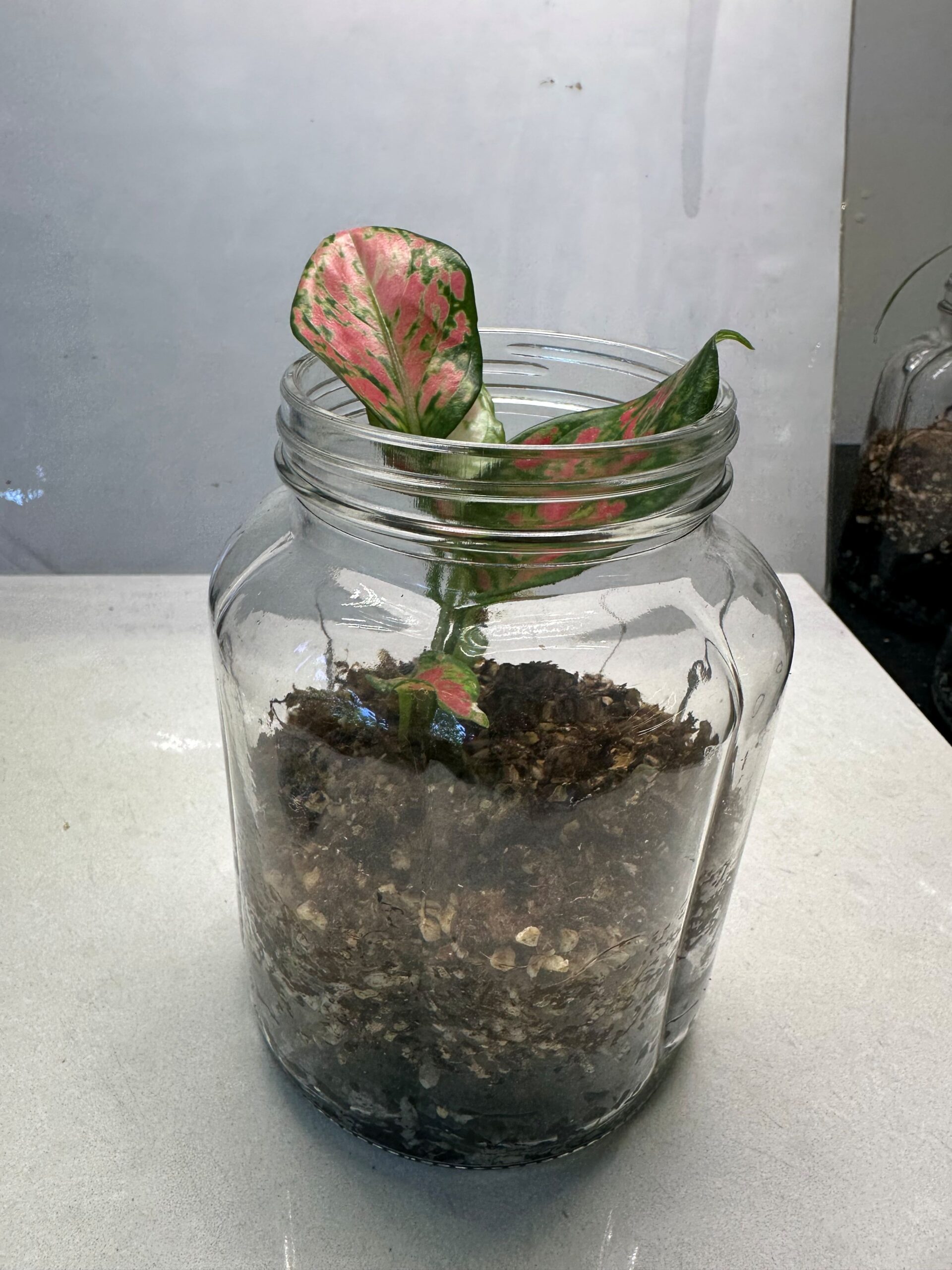
Welcome to the world of Terrariums! Here you have a closed terrarium, a self-sustaining eco system where you can see the water cycle in action each day, and the process of growth, decay and rebirth. A well made and positioned closed terrarium can go several years without needing to be opened to add water.
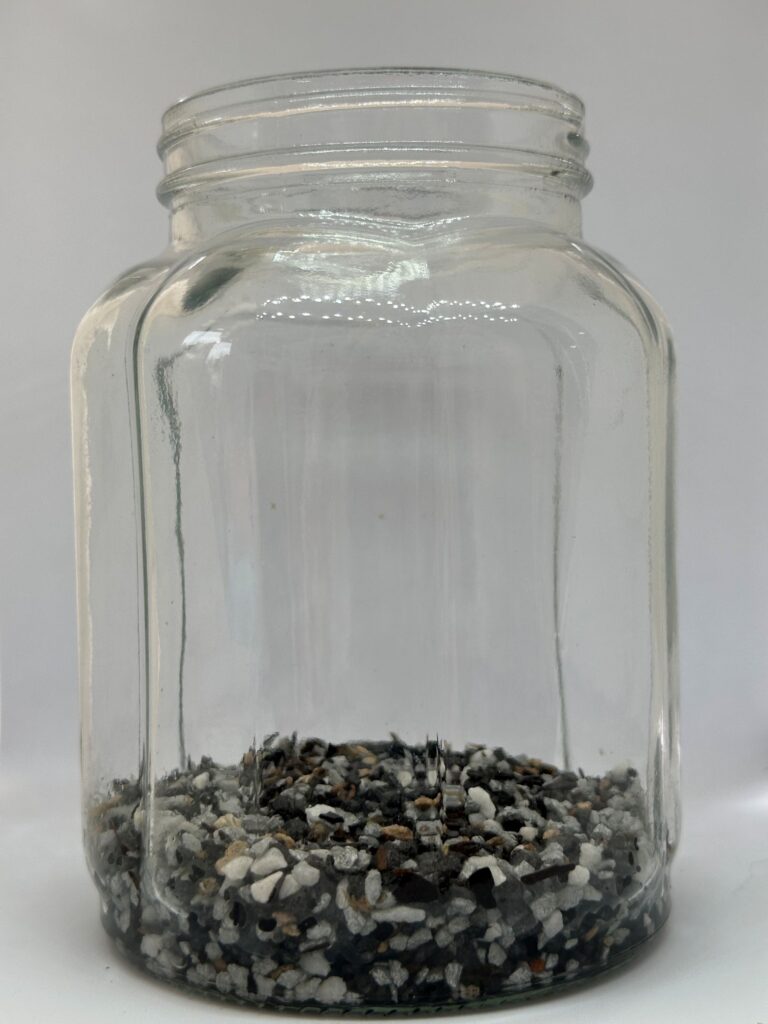
Base:
The base layer of your terrarium should consist of a loose substrate that allows for water to pool here and later evaporate. This layer should often be a similar depth to the substrate layer, as it is important for the water to sit away from your substrate. In your terrarium a mixture of small pebbles have been used as the base.
Substrates:
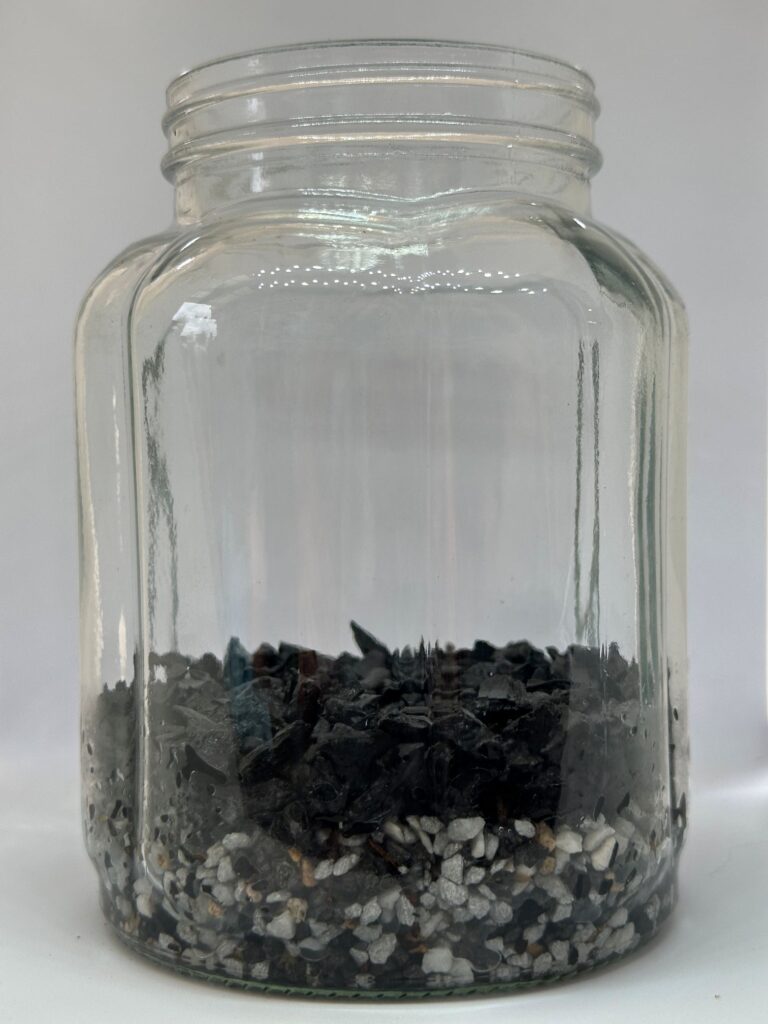
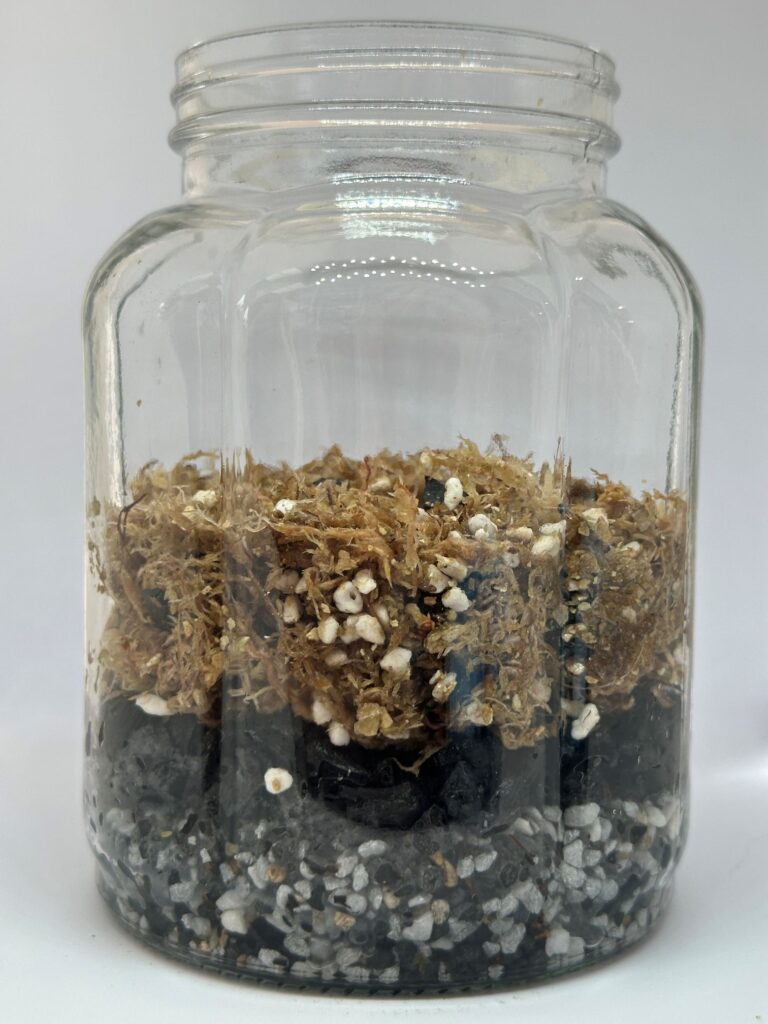
Above your base layer we have a layer of horticultural charcoal, a natural cleaner. The charcoal layer helps to seperate your looser soil substrates from your base layer, as well as helping to improve the health of your terrarium through the introduction of beneficial microbes. Above the charcoal is the substrate soil layer. In your terrarium, this is a home made blend of sphagnum moss, perlite, vermiculite and coco coir. This soil blend allows for a free draining soil, which is important in a high humidity environment like a closed terrarium.
When to water?:
As a closed terrarium, your terrarium should not need to be opened regularly. If not exposed to too extreme heat, your terrarium may not need to be opened to be watered for several years. To tell if it requires watering, look at where the water level sits in the pebbles at the base during the day. Water levels are often highest in the early morning, after the plants have released water with oxygen overnight and it has since condensed on the glass. If the water level at its highest is lower than the midway point of the gravel, it may be time to water the terrarium. When watering, any water is fine, but filtered, rainwater or demineralised water is best, as any impurities or minerals in the water will remain in the soil and can discolour it. Slowly add water, as you will not need to add much and the water may take some time to seep through the moss and soil.
Light:
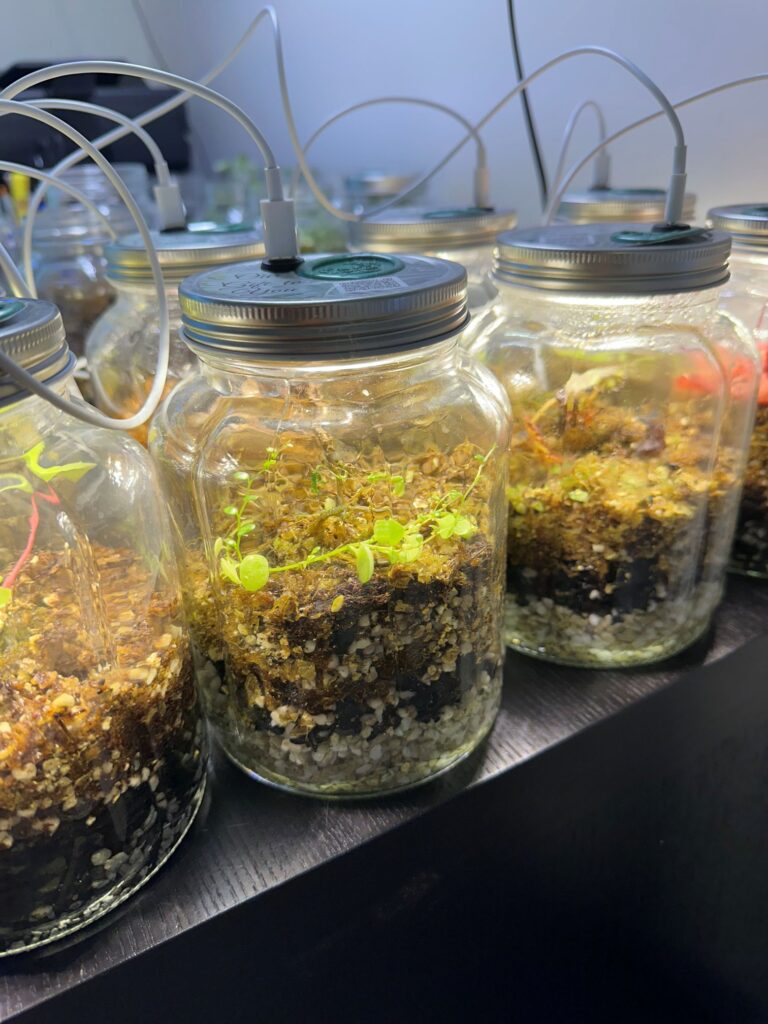
We have tried to maximise your chances of success as a terrarium parent by including a built in LED light in the terrarium. Grow lights are cruise control for plants!! If not using the built in light, place the terrarium in a well lit location, east or north facing windows are best, as afternoon light can be too harsh for the terrarium. To prevent the plants all growing towards one side of the jar, rotate the terrarium 90 degrees every few weeks.If using the light, you will just need to plug it in and run the light for ideally 6-10 hours per day. As the light is directly above the plants, you do not need to rotate the jar.
Springtails:
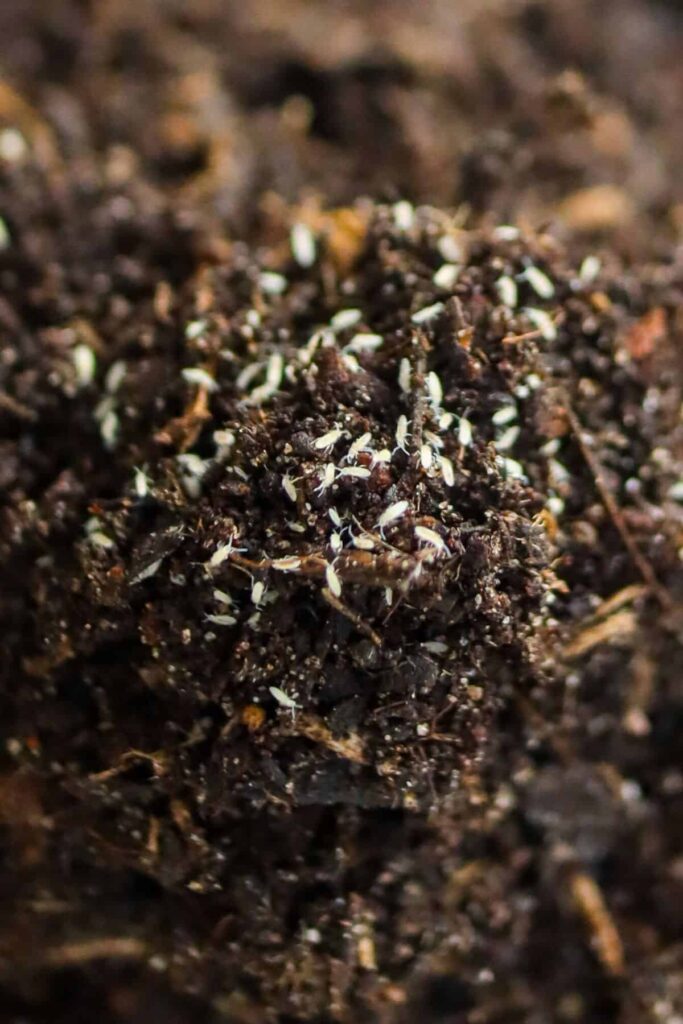
If you look closely at the terrarium, especially around any leaves or decaying plant matters, you might notice some little white friends. These are springtails, the cleanup crew of your terrarium. In closed terrariums it is important to introduce springtails to eat decaying plant matters to ensure mould is reduced. Springtails are able to manage their own population, increasing their numbers when food is plenty, and eating each other when food is few. Springtails are safe around humans and animals, and if any do manage to escape if you open the terrarium, they will die within a few hours, as they require a high humidity environment.
Other invertebrates: You may notice small snails, slater Beatles or other invertebrates in your terrarium. These often have hitch hiked into the terrarium within the soil blend. These are your new friends and pose no danger to the terrarium.